



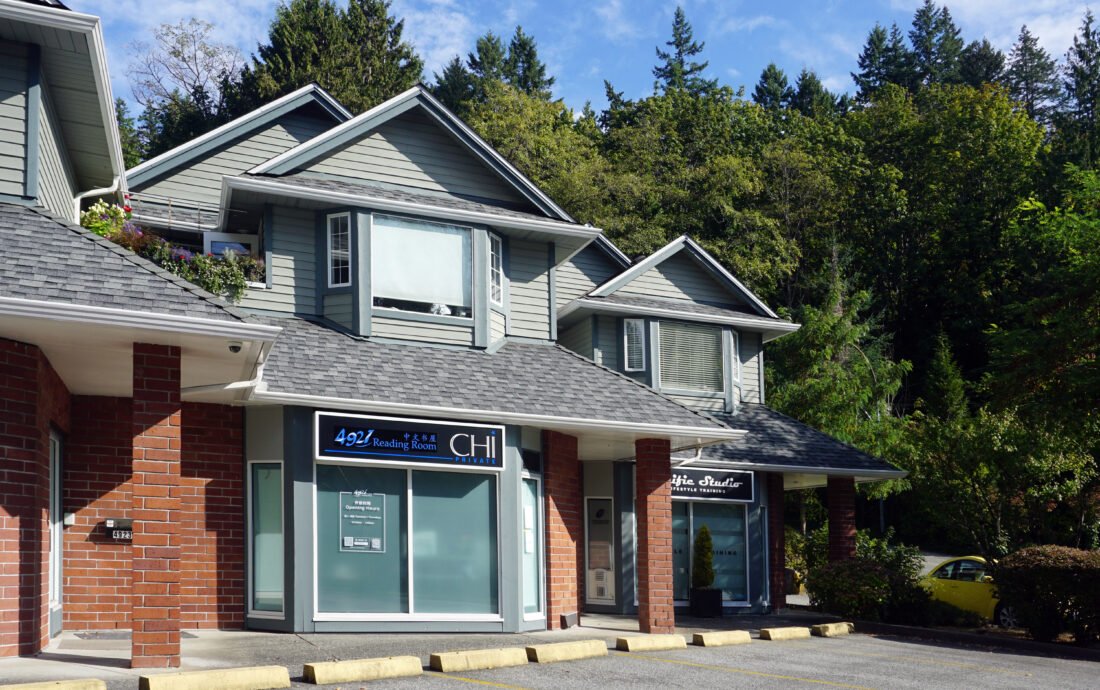
On Marine Drive, tucked between the bustle of daily life and the shoreline views that define West Vancouver, sits an unassuming storefront filled with books.
To many, the 4921 Reading Room might look like a small community library. But for hundreds of Chinese-speaking newcomers over the past eight years, it has been something much more: a place to find connection, confidence and a sense of belonging.
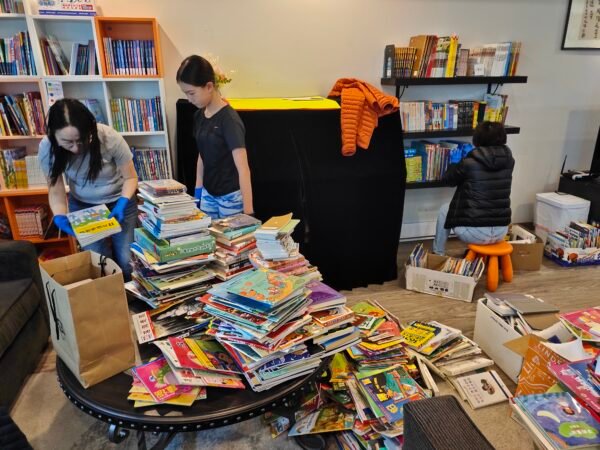
Founded in 2018, the volunteer-run non-profit began with a simple mission: to provide access to Chinese-language books and reading resources. Today, the organization houses nearly 1,500 Chinese-language titles, hosts book clubs, lectures and community events, and serves as a bridge between newcomers and the wider North Shore community.
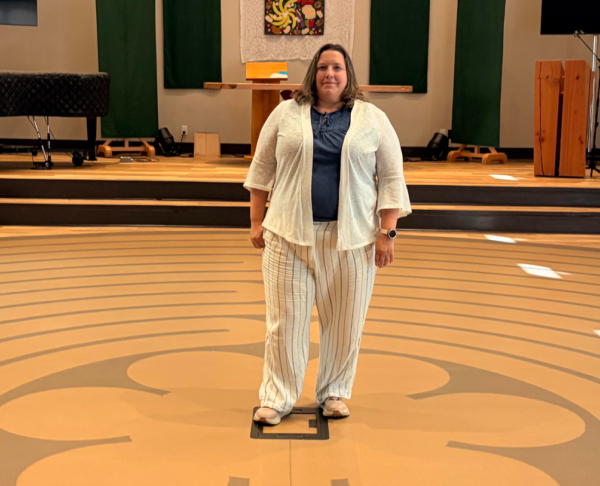
For Felicia Zhu, one of the club’s founders, the reading room’s success has never been measured by the number of books on its shelves.
“It’s about helping people find their place,” she said during a recent talk hosted by the West Vancouver Memorial Library’s Local Voices series.
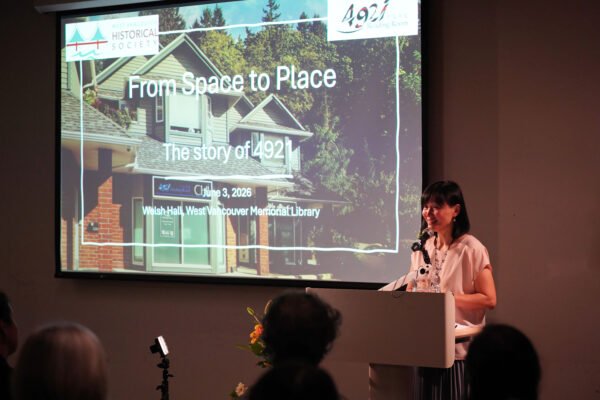
That idea, which is essentially finding one’s place, has become the guiding philosophy behind the organization.
More than a library
When Zhu first arrived in Canada as an immigrant, she noticed a challenge familiar to many newcomers. While learning a new language and adapting to a new culture, she found that many people struggled to fully participate in community life despite being educated, informed and deeply engaged individuals.
Language, she realized, could become a barrier to connection.
At the reading room, that barrier often disappears.
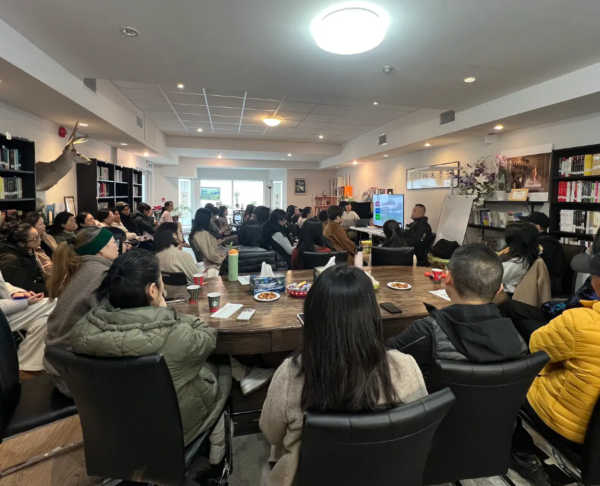
Visitors can discuss books, ask questions, share concerns and exchange ideas in Mandarin or Cantonese. Conversations that might feel intimidating in English become accessible.
“People feel seen, heard and valued,” Zhu said.
The reading room quickly evolved beyond its original purpose as a book-lending space. It became a gathering place where relationships formed, information was shared and newcomers could build confidence in navigating their new community.
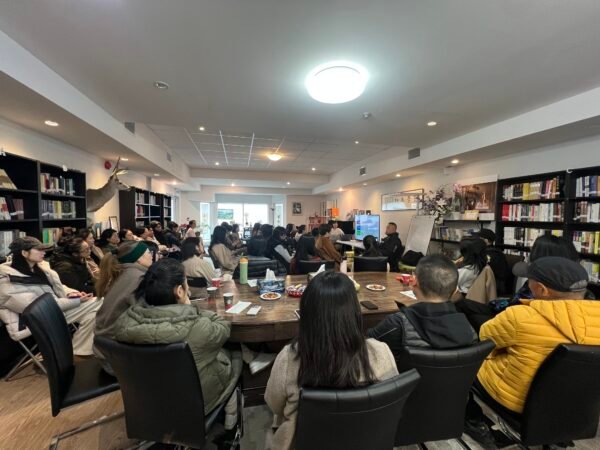
The organization now hosts regular talks, discussions and community programs, many designed to introduce residents to local institutions and resources.
Over the years, participants have visited West Vancouver’s City Hall, police department, art museum, Kay Meek Arts Centre and other community organizations. The goal, Zhu explained, has always been broader than serving one cultural group.
“Shared cultural roots were the starting point,” she said. “The intention has always been to create pathways into the life of the wider community.”
The journey from space to place
A central theme in Zhu’s work comes from the writings of renowned geographer Yi-Fu Tuan, whose book Space and Place: The Perspective of Experience explores how people develop attachment to the places where they live.
One idea from the book has stayed with her for years:
“Place is security. Space is freedom.”
Many immigrants come to Canada seeking opportunity, freedom and possibility, Zhu said. But eventually they discover that freedom alone is not enough.
People also need attachment.
They need neighbours they recognize. Organizations they trust. Stories they understand. Places that feel familiar.
West Vancouver may initially appear as a beautiful and safe place to live. But for newcomers, it only truly becomes home through experience.
That understanding has shaped nearly every initiative at the reading room.
Through guided visits, local partnerships and community programming, participants are encouraged to move beyond their comfort zones and engage with the wider community. Familiarity builds confidence. Confidence encourages participation. Participation creates trust.
And trust, over time, creates belonging.
The power of local stories
One of the most distinctive aspects of the reading room is its focus on local storytelling.
Zhu admits she grew up thinking primarily in terms of large historical narratives and global events. After more than a decade on the North Shore, however, she has developed a deeper appreciation for local history and everyday stories.
“The history behind a park, a grocery store or a community organization matters,” she said.
Those stories have become central to the reading room’s programming.
Members regularly read books connected to local people and issues. They follow community newspapers and discuss local events. They attend talks hosted by local authors, historians and community leaders.
The reading room’s shelves include collections such as West Vancouver Stories, an annual anthology featuring writing from residents across the community. While the stories often focus on seemingly ordinary moments, Zhu believes they help preserve something invaluable: a community’s collective memory.
For newcomers especially, local stories provide context that helps transform an unfamiliar town into a place they understand and care about.
Books as bridges
Reading groups remain at the heart of the organization’s activities.
Unlike traditional book clubs that focus solely on literature, discussions at the reading room often become conversations about identity, parenting, health and belonging.
One recent example was the group’s discussion of Scattered Minds by Vancouver physician and author Dr. Gabor Maté.
The book explores attention-deficit disorders and neurodiversity. Interest was so strong that nearly 100 people joined the discussion group.
For many parents, the conversations became deeply emotional.
Some spoke openly about years of feeling misunderstood while supporting children with learning differences. Others shared experiences they had never previously discussed.
The goal was never unanimous agreement, Zhu said.
Instead, the gathering provided something equally important: a space where people felt less alone.
At its best, a book club becomes more than a discussion about ideas on a page. It becomes a place where community members can share experiences, learn from one another and find support.
Investing in the next generation
The reading room has also become a platform for youth leadership.
Students regularly volunteer, organize events and mentor younger children.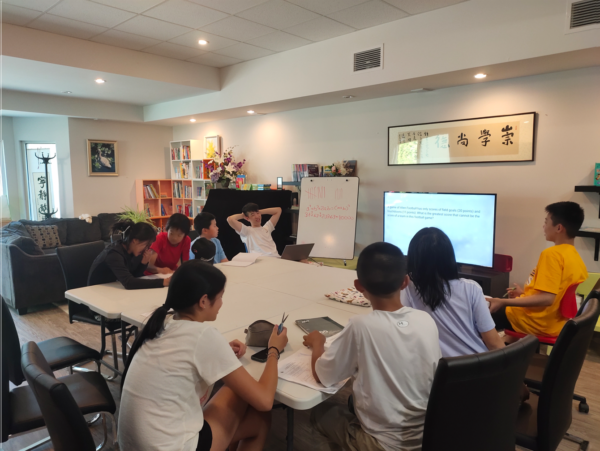
One initiative, called The Beauty of Math, was launched by a West Vancouver Secondary student who wanted to help younger learners develop confidence in mathematics. After he graduated, another student stepped forward to continue the program.
Other youth-led workshops have focused on academic success, university preparation and mentorship.
Rather than viewing young people as passive participants, Zhu sees them as contributors and future community leaders.
“They are mentors, leaders and role models,” she said.
A volunteer-powered community
Everything at 4921 Reading Room is powered by volunteers.
From cataloguing books and organizing events to maintaining the website and preparing refreshments, dozens of community members contribute their time and expertise.
The organization’s impact may seem modest compared with larger institutions. Yet its influence can be measured in quieter ways: friendships formed, confidence gained and connections made.
The reading room has also organized book sales supporting causes such as the West Vancouver Memorial Library Foundation and BC Children’s Hospital Foundation.
For Zhu, those efforts reflect a simple but important principle.
“This is how relationships are built,” she said.
Today, the reading room continues to evolve alongside the community it serves.
What began as a small collection of Chinese-language books has become a cultural hub, a gathering place and a gateway into community life.
In many ways, it embodies the lesson that has guided Zhu throughout her years in West Vancouver: places do not become meaningful because of buildings or addresses.
They become meaningful because of the people who gather there, the stories they share and the connections they create.
And sometimes, all of that can begin with a single room full of books.