






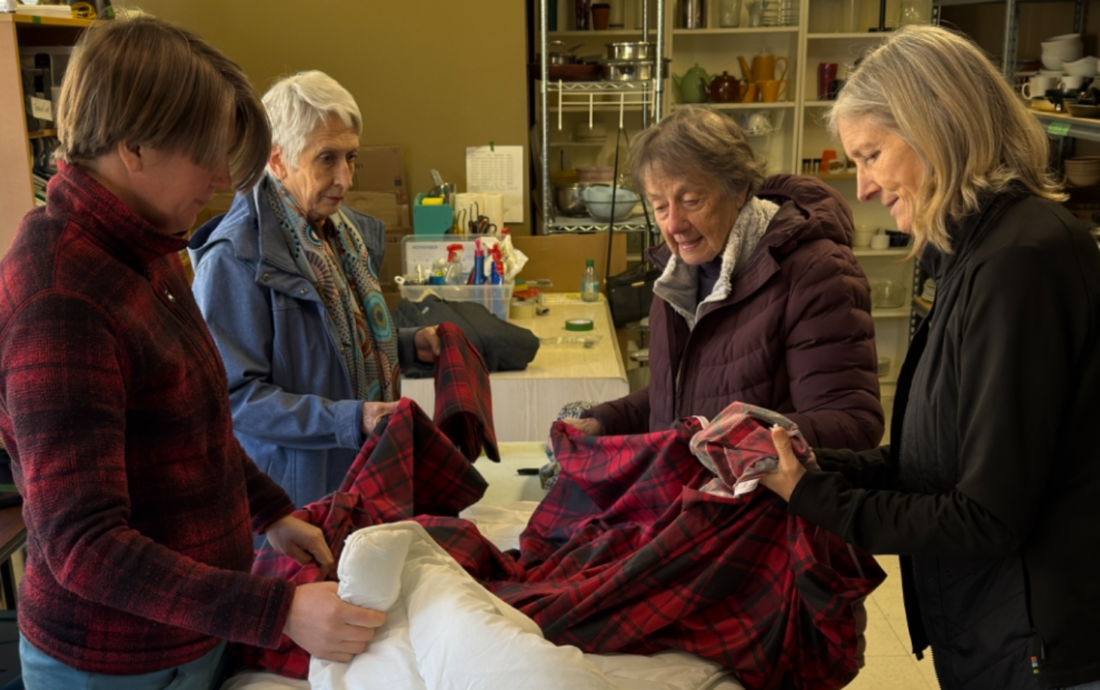
The request was modest: a few pieces of furniture for a man leaving a North Vancouver shelter and moving into his own accommodation.
Ruth Kershaw, a member of Highlands United Church, volunteered at a meal program at Lookout Shelter in 2008 when an outreach worker asked if she could help. At choir practice, she passed the request along to fellow singers. Their donations furnished his space; the word spread and more requests followed.

Eighteen years later, that response grew into Shelter to Home Furniture Bank, a church outreach program that typically helps between 160 and 180 clients each year. About 20 North Shore volunteers collect, sort and distribute donated furniture and household goods to North Shore residents who cannot otherwise meet those needs.
For some, the missing item is a bed or a kitchen table. Others arrive needing almost everything.
“The people who come to us are our friends and neighbours who have experienced circumstances that have caused them to be without their basic household needs,” said Ardis Nelson, who provided written responses about the program.
“I think we all take for granted having a bed, dishes, etc., but sometimes unimaginable circumstances intervene, and we are without.”
Those circumstances vary. Volunteers hear from women and children fleeing abusive homes, people who have lost housing and possessions through financial or health difficulties, and newcomers establishing themselves in Canada.

The program initially served men. Over time, Nelson said, it has served more women, including senior women, as well as women with children, families, refugees and immigrants. Its purpose is rather practical: provide enough furniture and household goods, free of charge, to make a space comfortable and usable. A bed means someone can stop sleeping on the floor. Pots, dishes and cutlery make it possible to prepare and eat a meal.
Clients and their support workers decide what they need from the available inventory.
The connections that bring people to Shelter to Home have developed through word of mouth. From its beginnings at Lookout Shelter, the program now receives referrals through about a dozen North Shore social service agencies.
Workers complete a checklist with their clients and arrange a visit to the storage space, where volunteers help them choose items. The furniture bank does not generally find housing or help people move into it, and clients must arrange transportation for their selections.
Behind those appointments is another network of volunteers working to keep the shelves and furniture inventory stocked.
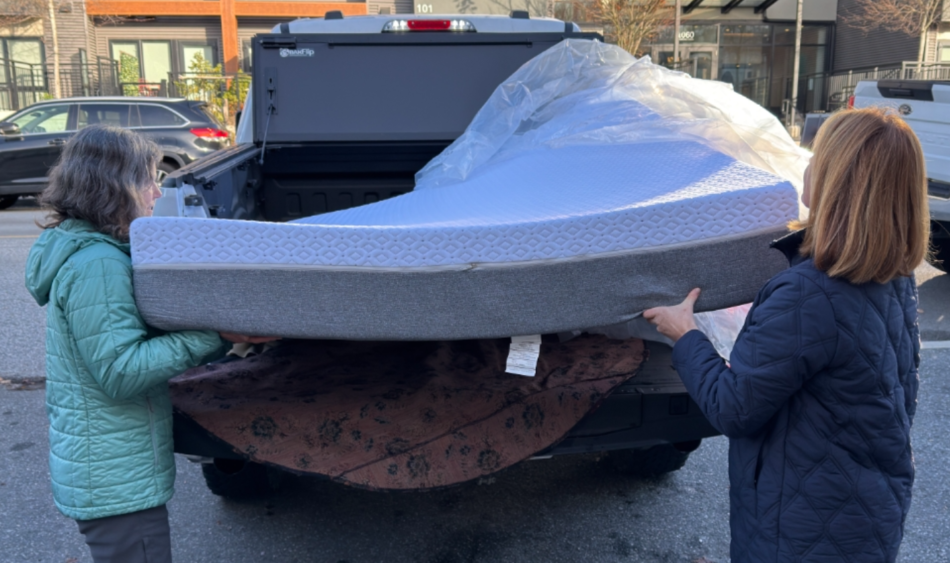
Donation-line volunteers work from home, answering messages, requesting photographs and checking the size and condition of offered items. On Wednesdays, volunteers receive drop-offs and sort donations: dishes, pots and pans, bedding, towels and lamps. Helping clients choose what they need requires more than knowing what is in storage.
“This is work that requires compassion and understanding,” Nelson said.
Some people, she explained, are facing circumstances they have never experienced before.
The program’s own circumstances have changed considerably since Kershaw stored the first donations at home. A congregation member later provided a small, bunker-like storage space in an office building. Today, Shelter to Home operates from an 800-square-foot space sublet from Atlas Pots, which subsidizes its rent.

Need for a new space by June 2027
Its sublease ends in June 2027. Nelson said the program needs a storage space of up to 2,500 square feet, and finding one on the North Shore will mean substantially higher costs. Even now, volunteers sometimes have to turn down suitable donations because there is nowhere to store them safely. Funding is another uncertainty. Community grants, church support and financial donations have covered expenses, chiefly rent, but that income is not assured.
Highlands United Church continues to provide administrative help, including bookkeeping and printing, while congregation members contribute goods and money. Volunteers also come from the wider community.
Donations give usable household items another life while helping people furnish their homes. The program accepts clean, undamaged, gently used furniture suitable for smaller spaces, including mattresses and box springs. Large dining tables, buffets and bedroom suites are unsuitable.

Prospective donors can leave a message at 778-653-9669 or visit sheltertohome.ca for information about furniture and financial donations. The program does not provide transportation, although it can connect donors with a local mover offering paid pickup services.
For Nelson, the need is closer to everyday life than people may recognize.
“People experiencing furniture poverty are you and me,” she said. “We never know when our lives will be turned upside down by circumstances.”