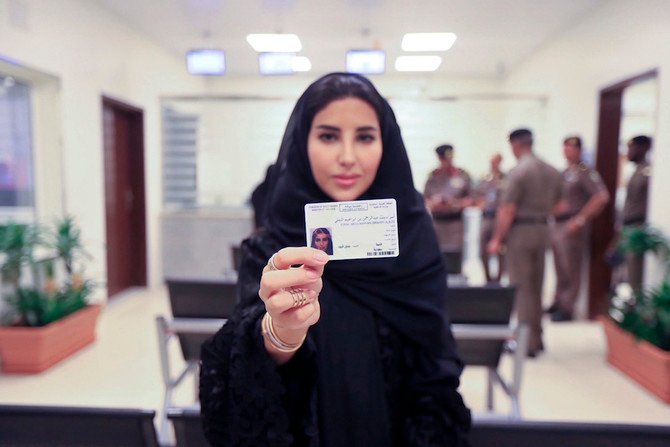
Rema Jawdat, a risk analyst at the Ministry of Economy and Planning in Saudi Arabia, has 12 years of driving experience in Lebanon, Switzerland, and the United States. But she could not drive in Saudi Arabia. That will change now. Saudi women have been issued driving licences before the lifting of the ban on women driving on June 24.
For the first time in more than 50 years, women will be able to drive legally in Saudi Arabia. “Driving, to me, represents having a choice; the choice of independent movement, now we have that option and that’s important,” Jawdat said, speaking to Khaleej Times.
Like Jawadat, a lot of women in Saudi Arabia know how to drive but the law did not permit them to. One such woman, Loujain al-Hathloul, has been protesting to get the ban on women driving lifted. But she will not be out on the road celebrating the historic moment because she is in jail along with several other activists. She has been arrested for posing a threat to national security. She has been arrested several times in recent years for campaigning for women’s right to drive by, well, driving a car.
Perhaps Mohammad bin Salman, the Crown Prince of Saudi Arabia, who is pushing through several reforms at the risk of antagonising the clerics, is afraid the activists would now press for more reforms, especially the abolition of the male guardianship system which makes sure women have no outdoor life independent of a male guardian.
He wants to project himself as a reformist and does not want to be seen being forced by activists. Moreover, he cannot afford to throw open the society all at once.
Vogue Arabia (yes, it has an Arab edition) was caught in the crossfire when it put a Saudi princess in a red convertible on the cover of its June issue to mark the end of the ban. Social media did not like Vogue’s celebration of the event when activists who fought to get the ban lifted were in jail. Photoshopped images of the Vogue cover with faces of jailed activists superimposed on the Saudi princesses did the rounds on social media.
Western media and activists have faced criticism for ignoring women’s struggles in the Arab world. A few months ago, when many in the media were advocating niqab for Muslim women in the west, Iranian women were facing brutal crackdown for protesting against compulsory head covering.