





For many Metro Vancouver residents, Horseshoe Bay has long been synonymous with departure. It is the place of ferry lineups, hurried coffees, overloaded trunks and weekend traffic inching toward the terminal. Most people arrive with somewhere else in mind.
But those who know the village best will tell you: slow down. Stay a while. You are already somewhere worth being.
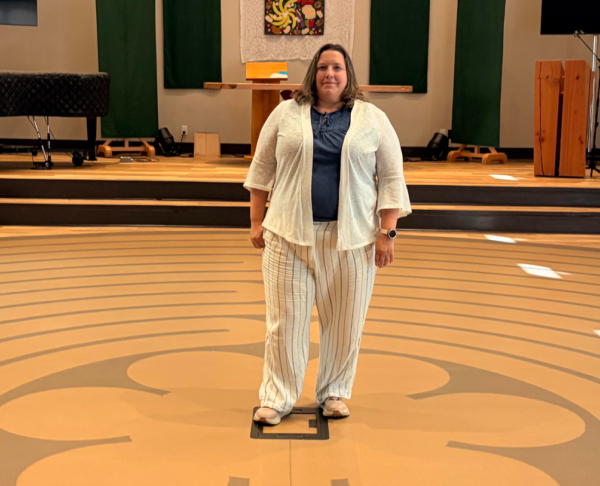
Laura Blodgett has watched people discover that for fifteen years. As the owner of Lalli Loves It, a beloved boutique tucked into the village’s compact streets, she has become something of an unofficial ambassador for the Horseshoe Bay way of life.
“For the perfect day, start in the morning with a coffee,” she says. “Walk around, go to Whytecliff Park, and if you have children, spend some time in the playground.”
It is advice that sounds simple, but it holds the full rhythm of a day here. Horseshoe Bay is not a place that needs much planning. It opens up to you gradually, on its own terms.
By 10 in the morning, sunlight settles across the marina while ferries glide steadily in and out of the terminal below the surrounding mountains. The village begins to wake at its own pace. Locals carry coffee along the waterfront. Dog walkers pause to chat outside cafés. Families wander toward the shoreline while cyclists and visitors drift through streets that make nearly everything walkable.

That ease is not accidental. It is built into the character of the place itself — and into the people who call it home.
Blodgett’s shop, Lalli Loves It, is as good a place as any to understand what Horseshoe Bay actually feels like from the inside. Part boutique, part neighbourhood gathering space, it operates on the logic of a community that knows itself well.

“If you have anything to hide, don’t come, because we’ll know,” she laughs. “If I am late, they’ll be at the door asking where I am.”
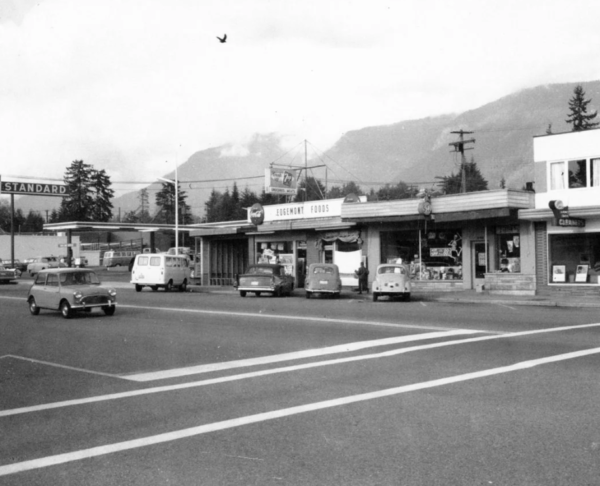
That closeness defines much of the village’s atmosphere. Unlike larger waterfront districts that can feel anonymous or heavily commercialized, Horseshoe Bay still carries the rhythms of a place where people genuinely look out for one another.
“People take care of each other,” Blodgett says simply.
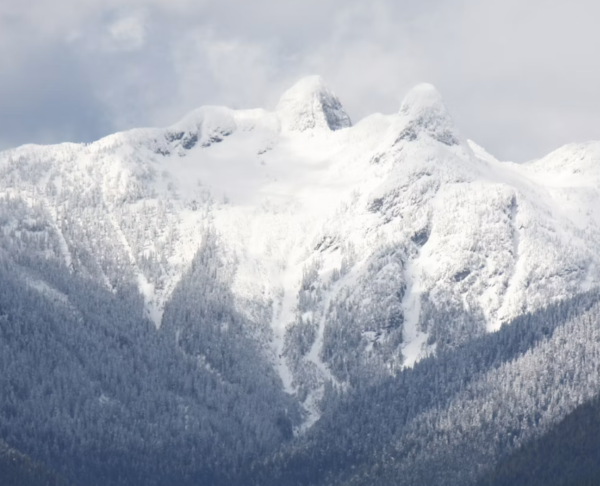
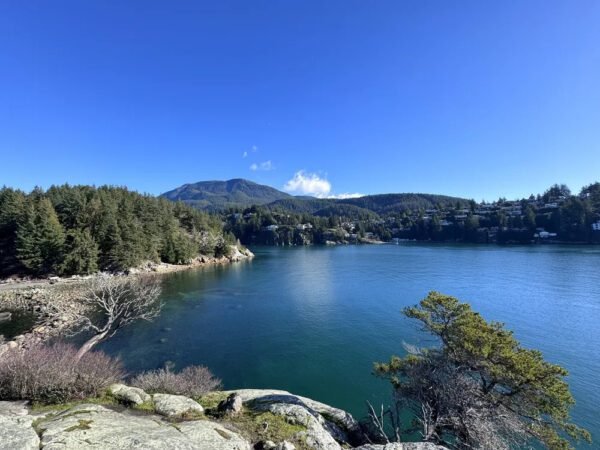
A morning walk along the seawall reveals why so many people linger longer than planned. The marina opens toward Howe Sound, where steep evergreen mountains rise sharply from the ocean. On calm days, reflections of sailboat masts ripple across the water while ferries slide in and out almost silently against the landscape.
Whytecliff Park — one of Blodgett’s first recommendations for any visitor — sits a short distance from the village along the shore of West Vancouver. It is one of the most quietly spectacular spots on the entire coast: rocky outcroppings drop toward kelp beds and clear water, and on clear days the view across Howe Sound stretches toward mountains that seem almost too large to be real. Divers come for the marine park below the surface. Others come simply to sit.

Further out, Bowen Island waits just a twenty-minute ferry ride across the water — a small, forested island that offers its own slower pace, art galleries, cafés and trails through coastal forest. It is the kind of side trip that turns a morning into an afternoon.
Back in the village, the playground near the waterfront draws families with young children, its structures overlooking the marina and the steady theatre of boats and ferries moving through the bay.

Tucked along the waterfront, Spirit Gallery has become one of the clearest expressions of what Horseshoe Bay holds for those willing to step inside.
Since opening in 1991, the Indigenous-owned gallery has grown into far more than a retail space. Owned by Erin Sam and her husband, the renowned Squamish/Kwakwaka’wakw artist Klatle-bhi, Spirit Gallery brings together Northwest Coast Indigenous art, storytelling, culture and genuine human connection under one roof.

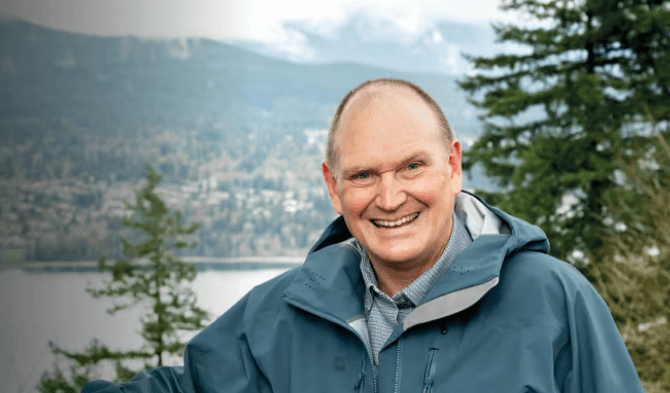
Erim Sam grew up in West Vancouver and has deep roots in Horseshoe Bay long before she took over management of the gallery in 1997 and purchased it in 2003. Before that, she worked at local landmarks including Berry Ice Cream and Troll’s Restaurant.
“That personal connection to the village still shapes the atmosphere of the gallery today,” she says.
Visitors entering Spirit Gallery encounter an impressive collection — silver, gold, and copper jewellery, masks, totem poles, sculpture, prints, clothing and gifts — but what stays with people is rarely only the artwork itself. Staff take time to share the stories behind each piece, and those conversations have a way of opening something up.
“Many visitors leave not only with a piece of art, but with a richer appreciation for the cultures and histories represented there,” Sam says.

The gallery’s position near the ferry terminal also places it naturally at the crossroads of countless journeys. Travellers heading toward Vancouver Island, the Sunshine Coast, Squamish or Whistler often step inside unexpectedly, and what begins as a brief stop becomes something more.
“Conversations often begin with where visitors have come from and where they are headed next,” Sam says. “The gallery staff frequently exchange travel tips, local recommendations and stories.”
For Sam, that exchange is not incidental — it is the point. “The drive into Horseshoe Bay, with the ocean opening up beside the mountains, creates an immediate sense of calm and arrival,” she says. “For many, it feels like an escape, despite being only about twenty minutes from downtown Vancouver on the 257 bus route.
By midday, the waterfront becomes increasingly animated.
Children wade into the shallow shoreline while kayakers and recreational boaters prepare for afternoon outings. Fish and chips are carried toward benches overlooking the marina. Ice cream melts quickly in the afternoon sun. Visitors drift between cafés, galleries and restaurants without much urgency.

Blodgett has watched this scene play out across fifteen years of seasons, and she still finds it remarkable — the way the village holds together all the different people who pass through it.
“As the season starts, people come from all over the world, all walks of life,” she says. “Locals, of course, but also people from everywhere.”
She describes the particular mix that gives Horseshoe Bay its energy: longtime residents who have watched the village evolve over decades, sharing space naturally with tourists, ferry passengers and weekend visitors discovering it for the first time. Her own shop reflects that mix.
“I source everything and dress people,” she says. “There’s a real dichotomy of people here.”
That mixture is part of what makes the village feel alive rather than merely picturesque. Horseshoe Bay is not a theme park version of a coastal community. It is an actual one, with the texture and warmth that comes from people genuinely inhabiting a place together over time.
By late afternoon, the pace softens even further.
Visitors who planned to stay an hour often remain much longer than intended. People settle onto rocks near the shoreline or pause beneath shaded trees overlooking the marina. Boats return quietly to their docks while the surrounding mountains begin to shift in the changing light.

Spirit Gallery draws people back at this hour too — not always to buy, but to linger. Sam speaks about customers who return year after year, and staff who have been with the gallery long enough to form genuine relationships with both local residents and returning visitors.
“In an increasingly fast-paced world,” she says, “those enduring personal connections are part of what gives the gallery its lasting importance to the community.”
The same could be said of Horseshoe Bay itself.
As evening approaches, the village becomes calmer without losing its energy entirely. The final ferries continue moving through the bay while marina lights begin reflecting across the water. The village feels suspended between two worlds: part transportation hub, part coastal neighbourhood, part escape from the city just twenty minutes away.
Both Blodgett and Sam have spent years building something here — not just businesses, but relationships, traditions and a shared sense of belonging.
“It’s a wonderful community,” Blodgett says. “People have been around and saw the village evolve. There’s a real sense of community.”
The perfect day in Horseshoe Bay turns out to be less about a specific itinerary and more about that feeling — the sense of slowing down long enough to notice the conversations, the mountains, the ferries, the shoreline reflections, and the small, unhurried moments that accumulate throughout the day.
It is, as Erin Sam describes it, a place where beauty, culture and human connection all meet.
And for many people who arrive thinking they are simply passing through, it quietly becomes somewhere they did not want to leave.